Written for landlords and building managers
Rental Turnover in Pompton Plains: Fixing Walls Between Tenants
Census estimates count 883 renter-occupied homes in Pompton Plains, out of 4,691 occupied homes in all, from detached houses to units in the big buildings that hold a large share of the town's newer housing. Every one of them turns over sooner or later, and the walls are where a tenancy leaves its marks. This guide is for owners and property managers who want the unit back on the market looking right, without paying for work it does not need.
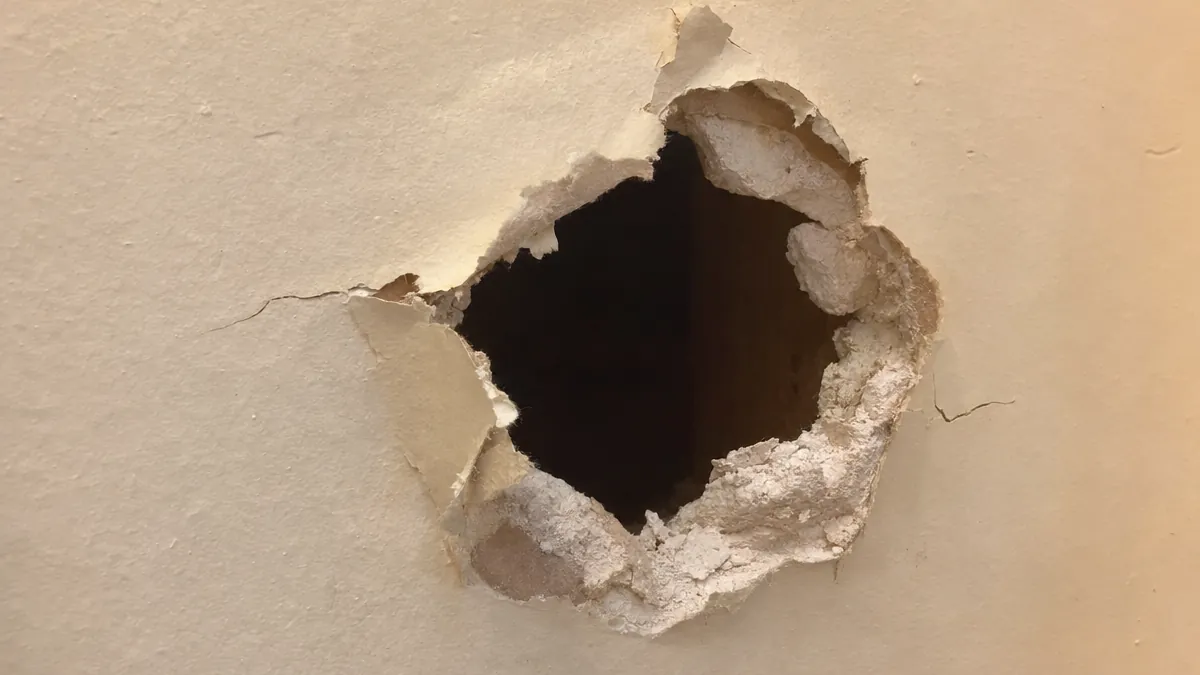
Walk the unit the day the keys come back
Go room by room with good light and your phone. Shine a flashlight so the beam skims along each wall: sidelight shows dents, filled holes and nail pops that are easy to miss head-on. Check behind every door for a doorknob hole, around the TV wall for anchor holes, along hallways for scuffs and chipped outside corners, and in the bathroom for soft board near the tub. Look up, too. A ceiling stain under a bathroom is a plumbing question before it is a drywall one.
Photograph everything against your move-in photos. That record matters for the security deposit conversation, and it gives a drywall pro an accurate picture when you call for a quote.
Patch it, paint it, or leave it
- Leave it: faint scuffs that a magic eraser lifts, and nail holes you plan to reuse for the next tenant's pictures.
- Paint only: scuffed but undamaged walls, and small filled nail holes that just need a coat.
- Patch, then paint: anchor holes, doorknob holes, torn paper from tape or adhesive hooks, dented corners.
- Bigger repair: soft or stained board near water, cracks that have reopened, and openings bigger than your hand.
The honest rule: a hole that gets filled must be primed and painted with the rest of the wall, not dabbed. A shiny square of touch-up paint on a flat wall tells the next tenant exactly where the last one put a fist.
Undoing the tenant's own touch-ups
Plenty of tenants try to fix a hole before they hand the keys back. Toothpaste, a dab of spackle pressed in with a thumb, a square of mesh tape stuck over a doorknob hole: all of it shows the moment paint goes on. Raking light finds the bumps. The fix is to scrape or sand those spots flush, cut out anything soft, and treat them like any other patch. Budget for it rather than being surprised by it.
The order that keeps the turnover short
- Clear the unit and walk it as soon as the keys are back.
- Book the drywall work first, before the painter, and group every hole and crack into one job.
- Allow drying time between compound coats; setting compound shortens it.
- Prime the patches, then paint whole walls corner to corner.
- Clean last, after the dust is gone, then do the final walk-through.
In the larger buildings
The Census estimates put 1,602 homes in Pompton Plains in buildings with 50 or more units. Management there usually sets the rules on work hours, elevator padding and where debris goes. Find those out before the repair date so nobody loses a morning to a locked loading door.
Keep the dated photos, the quote and the final invoice in the unit's file. If part of a deposit is held back for wall damage, that paper trail is what backs it up, and it makes the next turnover easier to plan.
For more detail on the patch types themselves, see the page on patching holes and remodel openings. For walls that crack again every winter, the crack and nail-pop page explains why a quick skim fails.